
 Joachim Zuther, Lymphedema Specialist.
Compression therapy, applied using padded short-stretch bandages, compression garments, along with alternative materials such as adjustable compression devices or sequential compression devices, is an integral part of lymphedema management. The goal of compression therapy is to maintain and improve the reduction of the swelling achieved during lymphedema treatments.
It is significant to recognize that although the swelling in lymphedema may be reduced to a normal or near normal size during treatments, the damage to the lymphatic system, which caused the onset of lymphedema, is permanent. In addition to the underlying damage to the lymphatic system, the elastic fibers in the tissues affected by lymphedema are damaged as well. These fibers lose their elasticity and tend to harden, especially in extreme cases (lymphostatic elephantiasis) and untreated lymphedema present over a long period of time. Without correct long-term management the evacuated fluid, in most cases, will reaccumulate in the affected body part.
 Compression garments by themselves will not reduce existing swelling and should therefore not be worn on an untreated, swollen extremity. Patients with lymphedema graduate from padded short-stretch bandages, which are applied by the lymphedema therapist in the intensive phase of complete decongestive therapy (CDT) to elastic compression garments only when the affected extremity is decongested.
Compression garments, much like hearing aids or eyeglasses, become part of the patient’s life and have to be worn on a daily basis in order to preserve the treatment success achieved during the decongestion of the edematous limb.

Bandage Liner
Some individuals may benefit from alternative and adjunct compression systems that can be used in combination with traditional compression garments or bandages. Short-stretch bandages applied by the therapist during the intensive phase of CDT may be combined with bandage liners that are filled with foam particles and “built-in” channels to help direct the flow of lymph; swell spots can be used underneath compression bandages for added compression in localized swelling, or to protect bony prominences.
Strapping systems, which provide gradient compression by use of low-stretch adjustable bands, can be used as an alternative for individuals having difficulty donning compression garments.
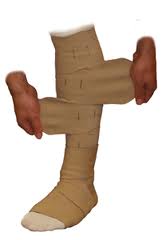
Adjustable Strapping System
Manufacturers of compression garments provide a wide variety of styles and variations, such as sleeves, gauntlets, stockings, pantyhose, vests, etc. They can be ordered in a large selection of standard sizes and different compression classes, which are determined either by the physician or the lymphedema therapist. Adjustable strapping systems for upper and lower extremities are also available in a variety of styles and sizes and while most patients’ measurements will fit within the parameters of the manufacturer’s standard sizes, some compression garments and strapping systems have to be ordered custom made. The correct size of the garment needs to be determined by the lymphedema therapist, or a certified fitter.
Dear Lymphedema Blog Reader – if you like the contents on this website, please help to keep it going. A great amount of work and research is necessary to provide you with up-to-date information on this site. Your donation supports these efforts and associated administrative costs. Surplus funds will be donated to Lymphedema/Lipedema-related charitable endeavors. Please donate using the “Donate Now” button on the right upper hand of this page – Thank You!
Join Lymphedema Guru, a Facebook page solely dedicated to informing about all things related to lymphedema – news, support groups, treatment centers, and much more