New Book for Patients and Caregivers 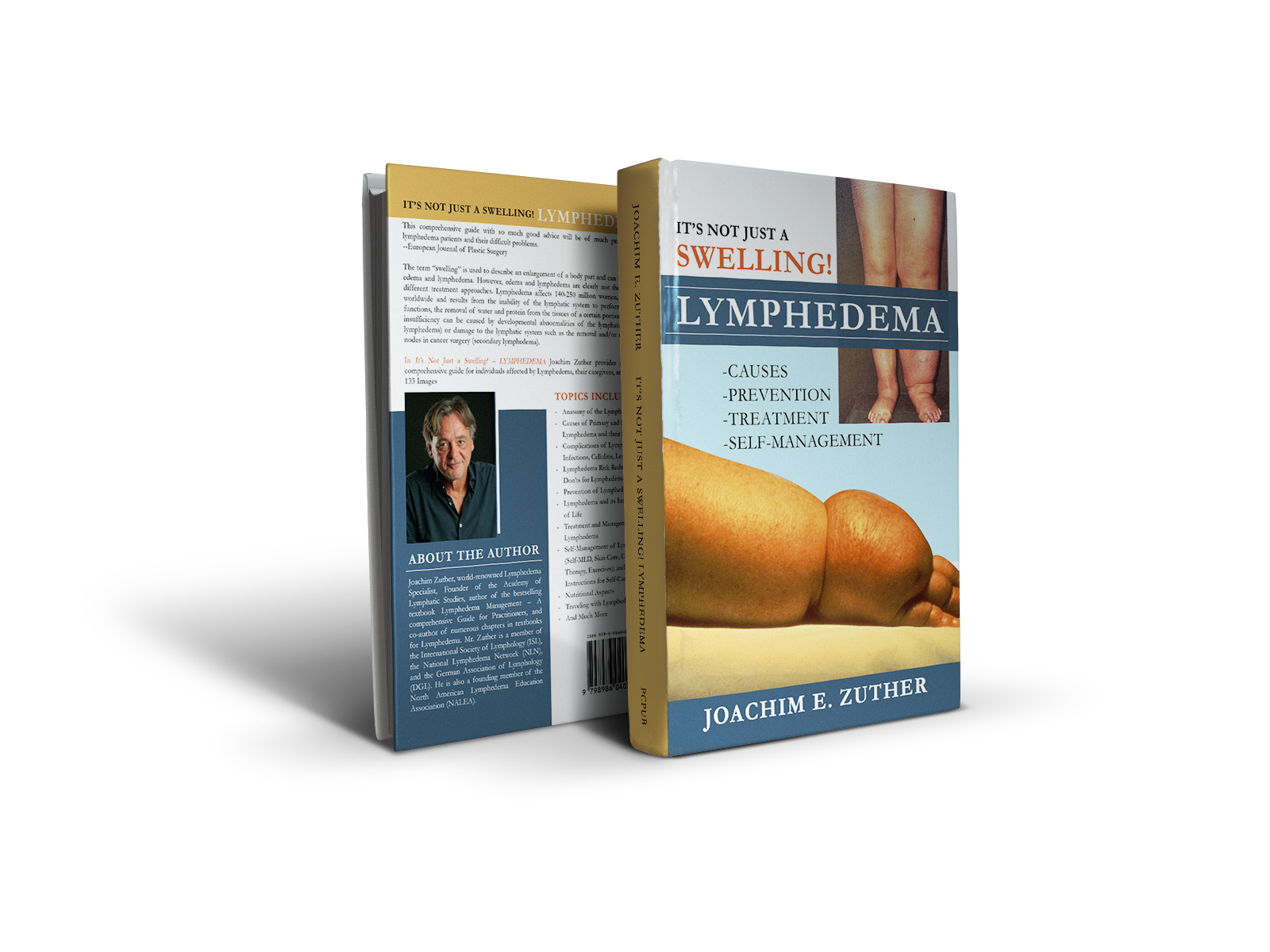
In It’s Not Just a Swelling! – LYMPHEDEMA Joachim Zuther provides an up-to-date and comprehensive guide for specifically geared towards individuals affected by Lymphedema, their caregivers, and family members. 133 Images. Paperback and Kindle version
Topics include:
- Self-Management of Lymphedema (Self-MLD, Skin Care, Compression Therapy, Exercises); includes Instructions for Self-Care with images
- Nutritional Aspects
- Lymphedema Risk Reduction, Do’s and Don’ts for Lymphedema
- Complications of Lymphedema, such as Infections, Cellulitis, Leakage
- Lymphedema and its Impact on Quality of Life
- Traveling with Lymphedema
- Prevention of Lymphedema
- Treatment and Management of Lymphedema
- Causes of Primary and Secondary Lymphedema and their Stages
- Anatomy of the Lymphatic System
- And Much More
Click Here to Buy
The Author 
Joachim Zuther, Lymphedema Specialist. Read more |
By Joachim Zuther, on November 2nd, 2023
The primary role of compression garments in lymphedema management is to maintain the reduction of the swelling achieved during the intensive treatment phase of Complete Decongestive Therapy (CDT). A high level of consistency in providing the appropriate compression is crucial in order to avoid re-accumulation of evacuated lymphedema fluid. This consistency is provided . . . → Read More: How to Care for Your Compression Garments
By Joachim Zuther, on August 15th, 2023
“After a day of sitting in the office my ankles are swollen.”
“During the last several months of my pregnancy, my legs practically doubled in size”
“My fingers and hand frequently get puffy following a long hike”
“My arm started swelling after I had surgery for my breast cancer”
“Following the removal of . . . → Read More: When is it Lymphedema? Self-Check for Lymphedema
By Joachim Zuther, on May 15th, 2023
Lymphedema is a progressive and chronic condition caused by the disruption or obstruction of normally functioning lymph vessels and/or nodes secondary to surgery involving the lymphatic system, or developmental abnormalities of the lymphatic system itself.
Although the swelling associated with lymphedema can be reduced to a normal or near-normal size by Complete Decongestive . . . → Read More: Nighttime Compression Options for Lymphedema
By Joachim Zuther, on October 28th, 2022
Being involved in lymphedema management for over 30 years, I would like to discuss the importance of appropriate dosing levels for lymphedema treatments, in other words, how many treatments per week should ideally be applied in Phase I, or the intensive phase of Complete Decongestive Therapy (CDT).
CDT is performed in two . . . → Read More: Dosing for Complete Decongestive Therapy in the Treatment of Lymphedema
By Joachim Zuther, on July 1st, 2022
Dear Friends in the Lymphedema Community!
I am very happy to report that the new book “It’s Not Just a Swelling! Lymphedema” is a big success; many of you who already read and use it have reported back to me indicating that the contents are very useful and a great help in dealing . . . → Read More: New Lymphedema Book for Patients
By Joachim Zuther, on June 25th, 2021
Patients affected by lymphedema graduate from compression bandages, which are in the majority of cases applied by a certified lymphedema therapist (CLT), to elastic compression garments once the affected body part is decongested; this stage is also known as phase two of Complete Decongestive Therapy (CDT), or the self-management phase.
Phase two is . . . → Read More: On the Importance of Quality Compression Garments in Lymphedema Management
|
Support the Lymphedema Blog This blog is supported by donations. Click to donate today.

Disclaimer The information on this web site is not intended to give medical advice and does not necessarily reflect the opinions of any physicians, nor is it guaranteed to be correct and complete. You should not rely on any information in this web site without seeking the advice of a physician or certified healthcare provider.
|



