
 Joachim Zuther, Lymphedema Specialist.
The primary role of compression garments in lymphedema management is to maintain the reduction of the swelling achieved during the intensive treatment phase of Complete Decongestive Therapy (CDT). A high level of consistency in providing the appropriate compression is crucial in order to avoid re-accumulation of evacuated lymphedema fluid. This consistency is provided by high quality compression garments containing inlay threads, which are made of Lycra or rubber. These inlay threads are woven into the material in a continuous manner, thus providing the correct level of compression. It is important to realize that garments of lesser quality, known as over-the-counter (OTC) garments do not contain inlay threads and are not suitable for lymphedema management.
Sleeves and stockings are generally worn from first thing in the morning until night time, and although compression stockings are constructed of strong elastic and durable materials, they stretch out after about twelve hours of wearing. This is especially true in regions of increased stretch (knee, elbow) where garments wear out more than in other areas, which may result in pooling of edema fluid in those areas.
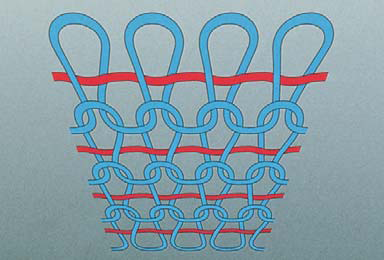
Inlay yarn in quality compression garment
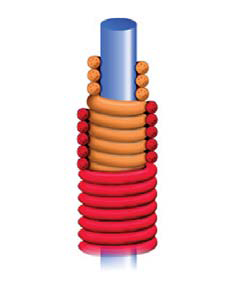
Inlay thread construction (blue – elastic thread, orange/red – cotton wrapping)
Compression garments act as a second layer of skin that provides the resistance the compromised skin no longer can; in order to maintain color, shape, elasticity and optimal therapeutic benefits of these garments, proper care is crucial.
Daily washing of compression garments helps them to restore and retain their elastic properties as well as removes perspiration, oils, dirt, bacteria and dead skin that accumulate inside the garment from normal wear. Frequent washing does not harm compression garments if done properly. However, the garments can be damaged easily, and its compressive qualities may be lost with even one tough rinse cycle, the wrong dryer setting or using the wrong cleaning agents.
Manufacturers such as Juzo, Medi, Jobst or Sigvaris include complete care instructions with their compression sleeves and stockings, which should always be followed for optimal care. Following is a list of items on specific guidelines in regard to proper care and washing, reflecting general consensus between various quality compression garment manufacturers:
Machine or hand-wash?
Garments (sleeves, stockings, pantyhose, gauntlets, face masks, vests, etc) may be machine or hand washed, depending on the preference of the user.
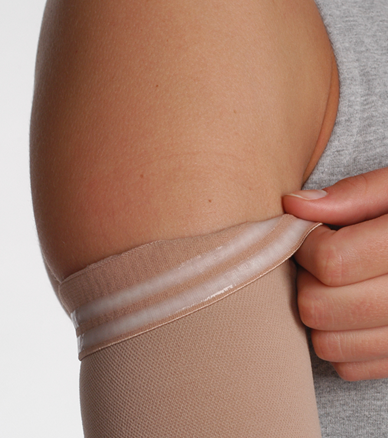
Sleeve with silicone band
Daily washing is recommended, especially if lotions or creams are being used (moisturizing lotion can break down the fibers in compression garments and should be applied only at night when the garment is removed). When washing garments in a machine it is recommended to place the garment in a mesh laundry bag in order to protect the fabric during the washing cycle (the gentle cycle should be utilized).
Water temperature may range between cool and warm, but should not be colder than 86 degrees Fahrenheit, or warmer than 104 degrees Fahrenheit. Darker colored garments should be washed in cool water.
It is best to have more than one garment (one to wear, one to wash), which should be worn alternately to allow the elasticity to recover and to prolong their effectiveness
Tips for hand washing procedures:
1. Start by filling a bowl, bucket, sink, or small tub with water.
2. The compression garment should be dipped gently into the water to dampen.
3. Add a small amount of washing solution (see below).
4. Let the compression garment soak for a few minutes.
5. For better cleaning, gently rub the fibers of the compression garment together without stretching them excessively.
6. Then, empty the tub and refill with water – dip or rinse the clean compression garment thoroughly especially along the seams, to rid the garment of residual salts and oils from perspiration.
7. Gently squeeze the compression garment to remove excess water.
8. Refer to the drying options below
What kinds of washing solutions are appropriate?
Harsh cleaning agents, solvents, petroleum-based cleaners etc. can destroy the thin fibers of compression garments. Mild soaps or detergents should be used, free of bleach, chlorine, fabric softeners or other laundry additives.
Some manufacturers offer garment washing solutions, which are formulated to remove oil, body acids, and skin salts quickly and easily without damage to the fabric; using these specially-designed solutions is recommended and will help extend the life of elastic garments.
How should compression garments be dried after washing? Compression garments may be machine or air dried. If using a dryer, the dial should be set on a no-heat (maximum low-heat) air drying cycle because excessive heat exposure may weaken or even damage the elastic fibers of the garments. If silicone bands are present, the no-heat dryer setting will help to protect this material.
When garments are air-dried, it is important not to pull, squeeze or wring out the residual water from the garment excessively. Rolling up the compression garment in a towel and gently squeezing the towel before laying them out to dry, speeds up the drying process; garments should never be left rolled up in a towel.
Whether garments are line-dried, or laid flat to dry, exposure to direct sunlight should be avoided and the garment should be turned inside out. It is recommended to place a towel on a drying rack and lay the garment on top to dry. If hanging the garment directly on a rack or pole to drip dry, the weight of the water could stretch the stockings, causing them to fit improperly.
When should a compression garment be replaced?
The elastic fibers of a compression garment will break down with wear. While
Sheer compression pantyhose
proper care will increase the lifespan of garments, they will need to replaced about every six months or when the garment shows signs of wear that could adversely affect the compressive properties of the garment. As a general rule, if the garment no longer returns to its original shape after washing, has runs or holes in the material, no longer feels compressive, and if the garment becomes easy to put on, it probably needs to be replaced.
Additional Resources:
Step Up, Speak Out: Gloves and Hygiene
Dear Lymphedema Blog Reader – if you like the contents on this website, please help to keep it going. A great amount of work and research is necessary to provide you with up-to-date information on this site. Your donation supports these efforts and associated administrative costs. Surplus funds will be donated to Lymphedema/Lipedema-related charitable endeavors. Please donate using the “Donate Now” button on the right upper hand of this page – Thank You!
Join Lymphedema Guru, a Facebook page solely dedicated to inform about all things related to lymphedema – news, support groups, treatment centers, and much more