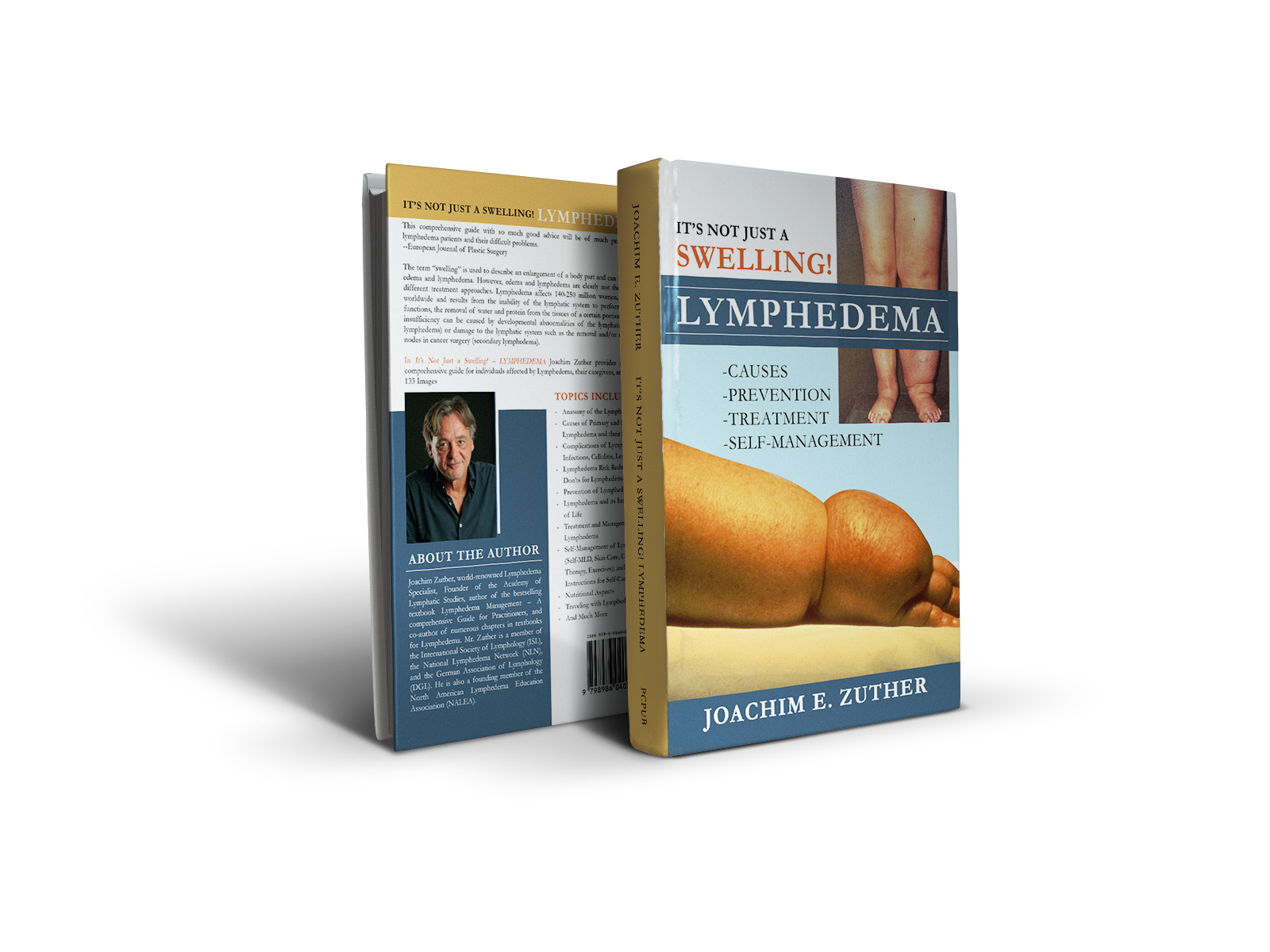
 Joachim Zuther, Lymphedema Specialist.
The surgical procedures performed on individuals affected by breast cancer may be mastectomy, partial mastectomy, or lumpectomy. Along with the actual breast surgery for cancer, axillary lymph nodes are removed and/or radiated. As a result of axillary lymph node clearance, the normal lymphatic drainage from the extremity is impaired, and some patients experience the onset of lymphedema. Accumulated lymph in the edematous arm provides a rich culture medium for bacteria, which makes lymphedematous 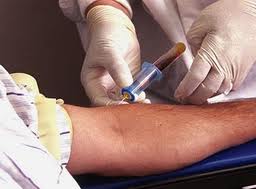 tissues very susceptible to infections. Simple injuries and puncture wounds can develop into local or generalized infections that may produce further lymphatic destruction and blockage. To reduce the risk of these postoperative complications, most patients are advised to not have blood pressure readings taken on, intravenous infusions in, or blood samples taken from, the arm on the operated side.
Very little published data are available to document the exact risk of lymphedema from performing blood pressure readings, blood draws and injections on the affected extremity. Lack of research and normal variations in each individual’s lymphatic system (numbers or sizes of remaining lymph nodes) make it difficult to quantify personal risk from each triggering factor. Recently published articles on risk-reduction practices in reputable journals may conclude that risk reduction practices are overrated and/or no risk reduction behaviors are needed for lymphedema. This is incorrect! – Dr. Nudelman, an Associate Professor of Family Medicine and co-founder of stepupspeakout (www.stepup-speakout.org) wrote an article discussing these recent attempts to debunk risk-reduction for lymphedema. Read Dr. Nudelman’s response to these articles here.
While further research is needed, healthcare professionals are encouraged to minimize the risk of lymphedema by taking blood pressure readings, 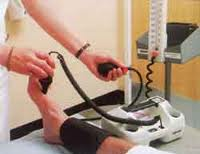 blood draws and injections on the non-affected limb whenever possible. In patients with breast cancer on both sides, these procedures should be performed on the leg or the foot. If this is not possible, the procedure should be done on the non-dominant arm. If one side had no lymph node removal, the arm on that side should be used, regardless of whether it is the dominant arm. In an emergency, however (such as a car accident), or if a medically necessary procedure (such as a CT or MRI) needs to be performed, and an intravenous line must be started, medical professionals must be allowed to do what they need to do to start the intravenous line as soon as possible, even if it would involve the affected extremity.
If a port is present, blood draws should be taken directly from there. In patients with “bad” veins, good hydration and some form of heat (heat pads, warm water) help to dilate the veins prior to cannulation.
To avoid the onset of lymphedema, or infections in existing lymphedema, health care professionals should follow expert consensus regarding best practices to avoid lymphedema and inform patients with breast cancer about their risk factors for developing lymphedema. While research suggests that the risk of complications resulting from blood draws or intravenous injections on the affected extremity is low, there IS still a risk, which is avoidable.
Not all medical professionals are familiar with the precautions for avoiding lymphedema, so patients have to be especially watchful advocates for themselves.
Further reading on the topic is available here:
National Lymphedema Network
National Cancer Institute
Mayo Clinic
National Institute of Health/PubMed
National Institute of Health/PubMed
Dear Lymphedema Blog Reader – if you like the contents on this website, please help to keep it going. A great amount of work and research is necessary to provide you with up-to-date information on this site. Your donation supports these efforts and associated administrative costs. Surplus funds will be donated to Lymphedema/Lipedema-related charitable endeavors. Please donate using the “Donate Now” button on the right upper hand of this page – Thank You!
Join Lymphedema Guru, a Facebook page solely dedicated to inform about all things related to lymphedema – news, support groups, treatment centers, and much more