 Joachim Zuther, Lymphedema Specialist.
The post-thrombotic syndrome (PTS) is an important chronic complication of deep vein thrombosis (DVT). Another condition known as chronic venous insufficiency (CVI) may develop following a PTS, which in some cases can be the cause for the onset of lymphedema.
To better understand the mechanics of these conditions, a brief discussion of the cardiovascular system is necessary:
 The cardiovascular system is an elaborate network designed to deliver oxygen and nutrients to body organs and to remove waste products of metabolism from the tissues. Its main components are the heart and a system of vessels that transports blood throughout the body. The systemic circulation is the portion of the cardiovascular system which transports oxygenated (arterial) blood away from the heart, to the rest of the body, and returns oxygen-depleted (venous) blood back to the heart.
On its way back to the heart, the venous blood passes from capillaries and small veins through progressively larger veins and connects with the right atrium of the heart via the superior and inferior vena cava.
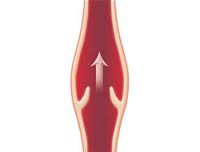 The blood pressure inside the thin walled veins is considerably lower than the pressure in the arteries. A system of valves inside the larger veins prevents pooling of venous blood in the lower extremities and helps to ensure transporting the venous blood back to the heart efficiently. In fact, the pressure in the venous system is so low that a sufficient return of blood to the heart would not be possible without the help of the muscle and joint pumps, diaphragmatic breathing and the suction effect of the heart during the relaxation phase or diastole. Together with a functioning valvular system in the veins, these supporting mechanisms propel the venous blood back to the heart.
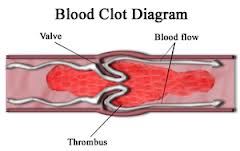 Deep venous thrombosis is caused by a blood clot (thrombus) that forms in the deep veins of the body, mostly in the legs; however, blood clots can form in the deep veins of the upper extremities as well. Blood clots can cause an obstruction of the return of venous blood from the extremities and form as a result of something slowing or changing the flow of blood in the veins.
Risk factors for thrombosis include:
- Long-term bed rest
- Crossing the legs for long periods of time when sitting, or sitting for long periods of time, such as in a plane or car
- During and after pregnancy
- Not having enough water in the body (dehydration)
- Taking birth control pills or estrogen hormones
- Using an intravenous catheter long-term
- Fractures in the pelvis or legs
- Obesity
- Recent surgery (most commonly hip, knee, or female pelvic surgery)
Embolism is a condition that can develop when a clot breaks off and moves through the bloodstream. A blood clot can get stuck in the brain, lungs, heart, or other area, and can lead to severe damage.
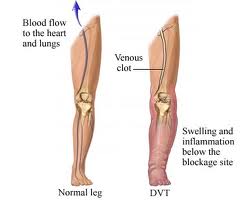 Post-thrombotic syndrome (PTS) – also known as post-phlebitic syndrome or venous stress disorder – is an important long-term complication of deep vein thrombosis (DVT) and can develop in more than one third (1) of patients who experience a deep vein thrombosis in the leg. PTS is caused by damage to the veins resulting from the DVT. As a result of incompetent valves and/or persistent venous obstruction from the thrombus, the fluid dynamics inside the veins change and pressure inside the venous vessels increases. Increased pressure causes the symptoms typically associated with PTS, such as pain, swelling and redness of the lower leg (which can be worse after walking or standing for a long time and better after resting or raising the leg).
What can be done to prevent post-thrombotic syndrome?
The best way to avoid PTS is to prevent a blood clot from forming in the first place. Some individuals have a higher risk of developing blood clots, especially patients in the hospital who have had recent surgery or are confined to bed. These patients are given compression boots and stockings to prevent blood clots from forming. Medication to prevent the formation of a thrombus in high-risk hospitalized patients is often used and will prevent some cases of PTS (4).
These and other individuals who experience symptoms of PTS greatly benefit from frequent elevation of the legs, exercise and the use of compression stockings, which prevent the venous blood from pooling. Studies have shown that elastic stockings are well tolerated and that their use reduces the overall incidence of the post-thrombotic syndrome from 49% to 26% and the overall incidence of severe forms of PTS from 12% to 3.5% (5).
Severe and chronic swelling, chronic pain varicose veins and venous ulcerations are symptoms that can develop in long standing PTS – 5% – 10% of patients with deep vein thrombosis may develop this severe form of PTS (2).
Failure to effectively combat the symptoms of post-thrombotic syndrome can lead to chronic venous insufficiencies (CVI), which in turn may develop into lymphedema.
Dear Lymphedema Blog Reader – if you like the contents on this website, please help to keep it going. A great amount of work and research is necessary to provide you with up-to-date information on this site. Your donation supports these efforts and associated administrative costs. Surplus funds will be donated to Lymphedema/Lipedema-related charitable endeavors. Please donate using the “Donate Now” button on the right upper hand of this page – Thank You!
Join Lymphedema Guru, a Facebook page solely dedicated to inform about all things related to lymphedema – news, support groups, treatment centers, and much more
- Ashrani AA, Heit JA. Incidence and cost burden of post-thrombotic syndrome. J Thromb Thrombolysis. 2009; 28: 465–476
http://www.ncbi.nlm.nih.gov/pubmed/19224134?dopt=Abstract - http://asheducationbook.hematologylibrary.org/content/2010/1/216.full.pdf
- Kahn SR, Shrier I, Julian JA, et al.(2008) Determinants and time course of the post-thrombotic syndrome after acute deep venous thrombosis. Ann Intern Med 149:698–707
- Geerts WH, Bergqvist D, Pineo GF, et al., and American College of Chest Physicians(2008) Prevention of venous thromboembolism: American College of Chest Physicians Evidence-Based Clinical Practice Guidelines (8th Edition) Chest 133:381S–453S
- Paolo Prandoni, MD, PhD; Anthonie W.A. Lensing, MD, PhD; Martin H. Prins, MD, PhD; Michela Frulla, MD; Antonio Marchiori, MD; Enrico Bernardi, MD, PhD; Daniela Tormene, MD; Laura Mosena, MD; Antonio Pagnan, MD; and Antonio Girolami, MD Below-Knee Elastic Compression Stockings To Prevent the Post-Thrombotic Syndrome: A Randomized, Controlled Trial Ann Intern Med. 17 August 2004;141(4):249-256 http://annals.org/article.aspx?articleid=717753