
 Joachim Zuther, Lymphedema Specialist.
Complete decongestive therapy (CDT), sometimes referred to as complex decongestive therapy, or combined physical therapy is the internationally recognized “gold standard” treatment system for the vast majority of patients affected by lymphedema.
Backed by long standing experience, CDT has shown to be safe and effective as the standard therapy for lymphedema. It is listed on the web sites of the American Cancer Society (ACS), the National Cancer Institute (NCI), the International Society of Lymphology (ISL) and the National Lymphedema Network (NLN) as the main component in the treatment and management of primary and secondary lymphedema.
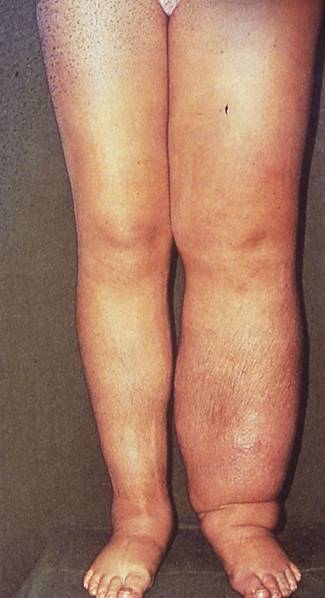
Lymphedema before CDT
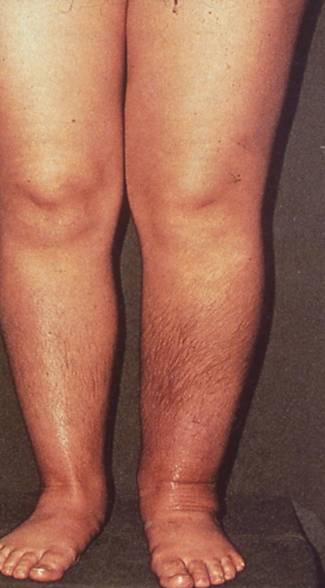
After CDT
Applied correctly by a skilled lymphedema therapist, CDT shows excellent long-term results in both primary and secondary lymphedema. Numerous published studies describe the effectiveness of this non-invasive, safe and reliable treatment approach, which has been well established in European countries since the 1970s. Although CDT has been practiced in the United States in one form or another since the 1980s, it only became accepted in the 1990s after definite guidelines were established, and all components of CDT were included in the teaching syllabi of schools providing training in lymphedema management in the United States.
The swelling in lymphedema is caused by an abnormal accumulation of protein and water molecules in the tissue and results from the inability of the lymphatic system to perform one of its basic functions, the removal of water and protein from the tissues of a certain portion of the body. This insufficiency can be caused by developmental abnormalities of the lymphatic system (primary lymphedema), or damage to the lymphatic system such as the removal or radiation of lymph nodes in cancer surgery, or infection of the lymphatic system (secondary lymphedema).
In order to reduce the swelling it is necessary to re-route the lymph flow – to include excess protein and water molecules – around the blocked area(s) into more centrally located healthy lymph vessels. This goal is achieved by a combination of different treatment modalities, all of which are integral components of CDT, and include
Manual Lymph Drainage (MLD),
Compression therapy,
Decongestive and breathing exercises and
Skin and nail care
Click here to watch a video explaining Complete Decongestive Therapy and its phases
CDT is performed in two phases. In phase one, also known as the intensive or 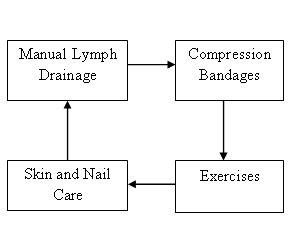 decongestive phase, treatments are administered by trained lymphedema therapists on a daily basis until the affected body part is decongested. Lymphedema most often affects the extremities, but can also be present in the head and neck, trunk, or external genitalia.
The duration of the intensive phase varies with the severity of the condition and averages two-three weeks for individuals with lymphedema affecting the arm, and two-four weeks for lymphedema affecting the leg. In extreme cases the decongestive phase may last up to six to eight weeks and may have to be repeated several times.
The end of the first phase of CDT is determined by the results of 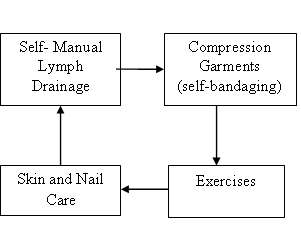 measurements on the affected body part, which are taken by the therapist. Once measurements approach a plateau, the end of phase one is reached and the patient progresses seamlessly into phase two of CDT, also known as the self-management phase. Phase two is an ongoing and individualized part of CDT, in which the patient assumes responsibility for maintaining and improving the treatment results achieved in phase one.
During the intensive phase, the patients are instructed in the individual components of self-management, which include a skin care regimen, home exercises, self-manual lymph drainage and the application of compression garments for daytime use. In some cases it may be necessary for the patient to apply padded compression bandages for nighttime use.
Regular check ups with the physician and the lymphedema therapist during phase two are necessary.
Dear Lymphedema Blog Reader – if you like the contents on this website, please help to keep it going. A great amount of work and research is necessary to provide you with up-to-date information on this site. Your donation supports these efforts and associated administrative costs. Surplus funds will be donated to Lymphedema/Lipedema-related charitable endeavors. Please donate using the “Donate Now” button on the right upper hand of this page – Thank You!
Join Lymphedema Guru, a Facebook page solely dedicated to inform about all things related to lymphedema – news, support groups, treatment centers, and much more